When customers underestimate the value of their old products, retailers lose value too
When customers underestimate what their old devices are worth, they opt out of trade-in altogether - our research found 28% don't participate because they assume the value is too low, the single most common barrier.
For many consumers, the biggest barrier to trade-in is the assumption that the value they will receive will be too low to justify taking part.
In our report: Standing out in a crowded market with retail trade-in, we found that 28% of consumers do not participate in trade-in because they believe the trade-in value is too low. This is the most common barrier identified in the research.
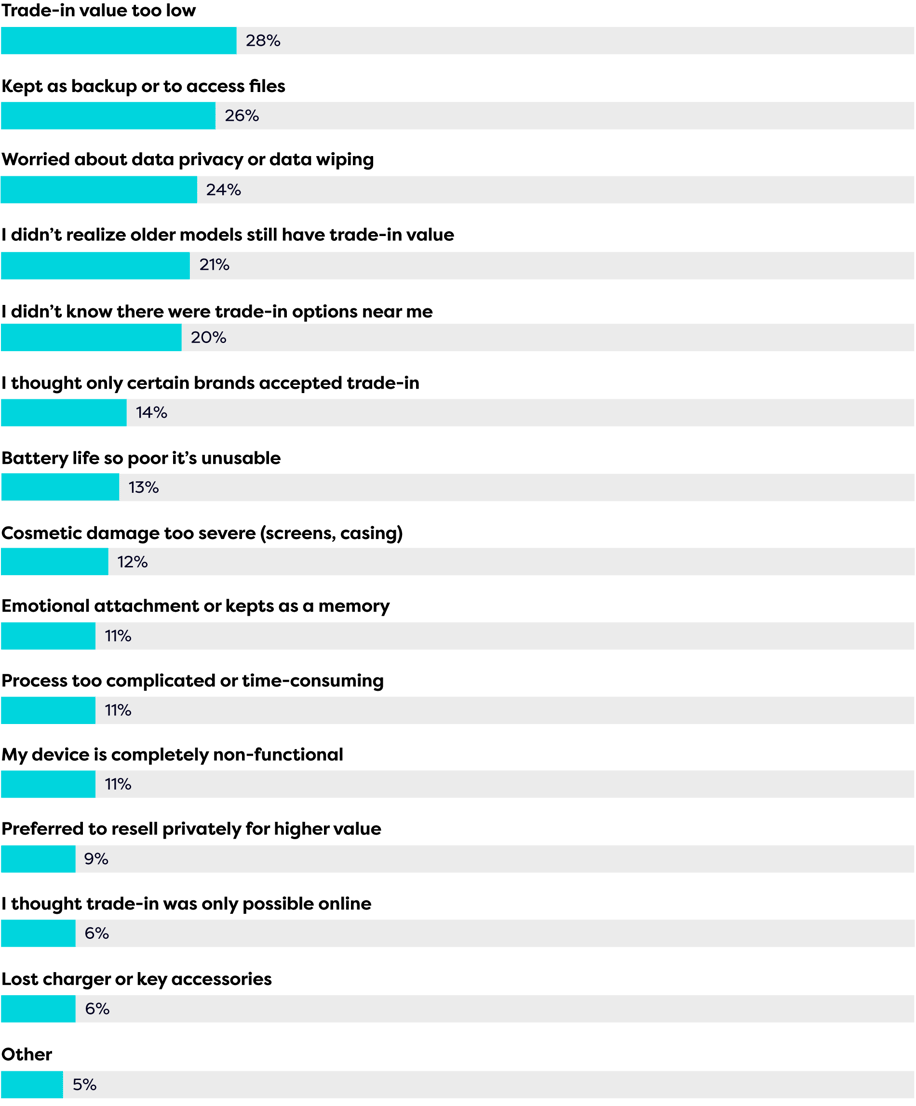
Figure 1: Main barriers preventing consumers from participating in trade-in programs
That perception matters because it can stop customers before they even check what their product might be worth. If the expected return feels too small, trade-in becomes easy to dismiss, especially when customers also factor in the time, effort or uncertainty involved in completing the process.
The challenge becomes even greater when products are older, damaged or no longer working.
The report found that 21% of consumers do not trade-in because they did not realise older models still have trade-in value, while 11% see a completely non-functional device as a barrier to participation. More broadly, 71% of consumers assume that older or non-working products have little or no meaningful trade-in value.
That assumption creates a major missed opportunity. Customers may be leaving value behind simply because they have already decided their product is not eligible, worthwhile or valuable enough to trade-in.
Device condition has a clear impact on behaviour. Consumers are around 4x times less likely to trade-in if their device is non-working compared with one in good condition. The gap is even more pronounced among older consumers, who tend to assign lower residual value to non-functional products. In fact, younger consumers (25-34 year olds) were 3x more likely to assign a $150 value to a non-working device than 55-65 year olds.
The expected trade-in value varies significantly depending on the condition of the device, with consumers expecting higher values for devices in better condition. For example, to capture 50% of the addressable market, the expected trade-in value is at $202 for a device in good working condition. Our Standing out in a crowded market with retail trade-in report, highlights the importance of condition-based pricing whilst comparing the averages prices across multiple conditions - from non-working to excellent grade.
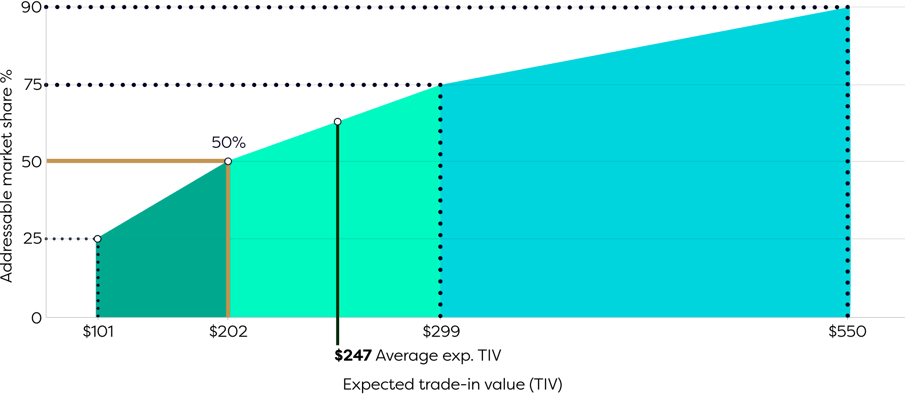
Figure 2: Minimum trade-in value that would make consumers trade-in, based on device condition
This is where communication becomes commercially important. Retailers need to make the potential value of older and lower-condition products more visible, particularly at the point where customers are deciding whether to replace them. Simple messaging can help reset expectations: “Your old device may still be worth something” or “Even broken products can help reduce the cost of your next purchase.”
That kind of reassurance can change how customers think about trade-in. Instead of seeing an old product as something to store, discard or recycle, they can start to see it as a contribution towards their next purchase.
There is also a strategic role for enhanced trade-in incentives. Retailers can use promotional trade-in values, minimum value guarantees or additional incentives towards new purchases to make the offer feel more compelling. This can be particularly useful during product launches, seasonal campaigns or competitive trading periods, where trade-in can provide an effective alternative to blanket discounting.
The advantage is that trade-in can reduce the effective price for the customer while still protecting the perceived value of the new product. Rather than relying solely on price cuts, retailers can use existing product value to make the next purchase feel more accessible.
To increase participation, customers need to see the benefit early and clearly. That means showing how trade-in reduces the net purchase price, explaining how valuations are calculated and making it clear that older or damaged products may still be eligible.
The retailers that do this well can unlock value from products customers may otherwise keep unused or assume are worthless, while creating stronger reasons to upgrade sooner through a more value-led alternative to traditional discounting.
Access our Standing out in a crowded market with retail trade-in report to learn more about how retailers can improve value perception and increase trade-in participation.
This data is explored in depth in our Standing out in a crowded market with retail trade-in report
Trade-in isn’t just a feature - it’s a proven commercial strategy that helps you drive higher spend, earlier upgrades and build long-term loyalty for your consumer electronics.
Get the full report
Fill in the form and we'll send it over.
More from our research team
Winning a sale is one thing - giving customers a reason to come back is another
The loyalty effect of trade-in is clear: 84% of consumers would buy their next smartphone from the same brand if it offered a compelling trade-in experience.
How trade-in can accelerate the purchase decision and increase basket conversion
Across categories, the availability of a competitive trade-in offer can directly influence whether a purchase happens at all, and when it happens.
The personal data privacy question retailers need to answer before customers trade-in
For many customers, trading in a device hinges on trust - connected products hold years of personal data, and people need confidence it will be protected, transferred and securely wiped before they hand anything over.
Get new research direct to your inbox
No spam. Just the latest insights from Alchemy's research team, delivered when we publish.